 Back to Main Menu




Mathematical proofs: why they matter in A-level maths and beyond
Explore some examples and real-world applications of mathematical proofs, a key part of the A-level maths syllabus.
Mathematical proofs are a core element of A-level maths that help students develop logical thinking and a deeper understanding of mathematical concepts.
In this article, we’ll focus on these key points and themes:
- What is a mathematical proof?
- Some examples of mathematical proofs
- Why this concept is important
- How mathematical proofs are applied in the real world
What is a mathematical proof?
A mathematical proof is a logical argument that establishes the truth of a statement using accepted principles, definitions and previously proven results.
In A-level maths, proof is used to show that a statement holds true in all cases, leaving no room for doubt or exception. In other words, it’s not just about getting the right answer – it’s about demonstrating why the answer is correct.
Mathematical proofs are essential for building confidence in the validity of formulas, theorems and identities. They also help to encourage precision and clarity in reasoning, which is a key skill both in exams and in many real-world disciplines.
Recommended Content
Types of mathematical proofs
Deductive proof
Also known as proof by deduction, this method uses a series of logical steps based on established facts to arrive at a conclusion. It’s the most common type used in A-level maths exam questions.
Proof by exhaustion
Involves checking all possible cases one-by-one to show that a statement is always true. It’s often used when there are a limited number of scenarios.
Disproof by counter-example
Demonstrates that a general statement is false by providing a single example that contradicts it.
Proof by contradiction
Starts by assuming the opposite of what you want to prove, then shows this assumption leads to a contradiction, meaning the original statement must be true.
Practical examples of A-level maths proofs
A-level maths proofs may be easier to understand when they’re seen in action. For example, a question might involve proving that the sum of two even numbers is always even. This type of question involves using algebraic proof techniques – expressing even numbers as 2n and 2m, then showing their sum (2n + 2m = 2(n + m)) is divisible by 2.
In trigonometry, you may need to produce a trigonometric identity proof, such as showing that sin²θ + cos²θ = 1. This is a classic example that tests understanding of proof techniques in A-level maths through logical reasoning and function manipulation.
A calculator like the fx-991CW+ UK can support understanding of trigonometric identities through evaluation of expressions for different values of θ. For example, to check sin²θ + cos²θ = 1 when θ = 30°:
- Check that the calculator is set to degrees.
- Open the Calculate app.
- Enter sin²(30°) + cos²(30°).
- Press EXE to evaluate the expression.
- The calculator returns 1.
This can be repeated for other values of θ to explore the identity and identify the pattern. However, numerical checks don’t constitute a formal mathematical proof – you still need to demonstrate that the identity holds for all applicable values of θ.
On the fx-CG100 graphic calculator, you can take this exploration further by graphing y = sin²x + cos²x and seeing visually that the expression remains equal to 1.
Another common scenario involves geometric proofs, such as demonstrating why the angles in a triangle always sum to 180°. These questions often combine deductive reasoning in mathematics with diagram-based logic.
When doing A-level maths revision, it’s useful to practise a variety of these proof types. They can help build fluency with mathematical theorems and logic, supporting preparation for structured, mark-heavy questions in exams.
opers can reduce bugs and improve security.
Why mathematical proofs are important
In A-level maths and beyond, proofs are more than just academic exercises. They’re important tools for understanding, verifying and communicating mathematical ideas. Rather than relying on intuition or examples alone, proofs provide a solid foundation for certainty in mathematics.
- They establish truth: Proofs provide a rigorous way to confirm the validity of mathematical statements, ensuring they are true in all possible cases, not just a handful of examples. This absolute certainty is one of the key features that distinguishes maths from other disciplines.
- They help to avoid errors: By using deductive reasoning, mathematical proofs help identify and eliminate errors in logic or incorrect assumptions. This precision is particularly important when working with complex problems where small mistakes can have big repercussions.
- They build knowledge: Every new theorem or result in mathematics builds upon what has already been proven. Proofs link concepts together, allowing mathematicians to develop new theories based on a well-established logical framework.
- They foster critical thinking: Constructing and analysing proofs sharpens logical reasoning and encourages problem-solving from multiple angles. These skills are not only important to succeed in A-level maths, but also valuable in everyday decision-making and many professional fields.
- They communicate mathematical ideas: Proofs serve as a universal language for mathematicians. By presenting ideas clearly and logically, they ensure that conclusions are understood, verified and accepted across the mathematical community.

Real-world applications of maths proofs
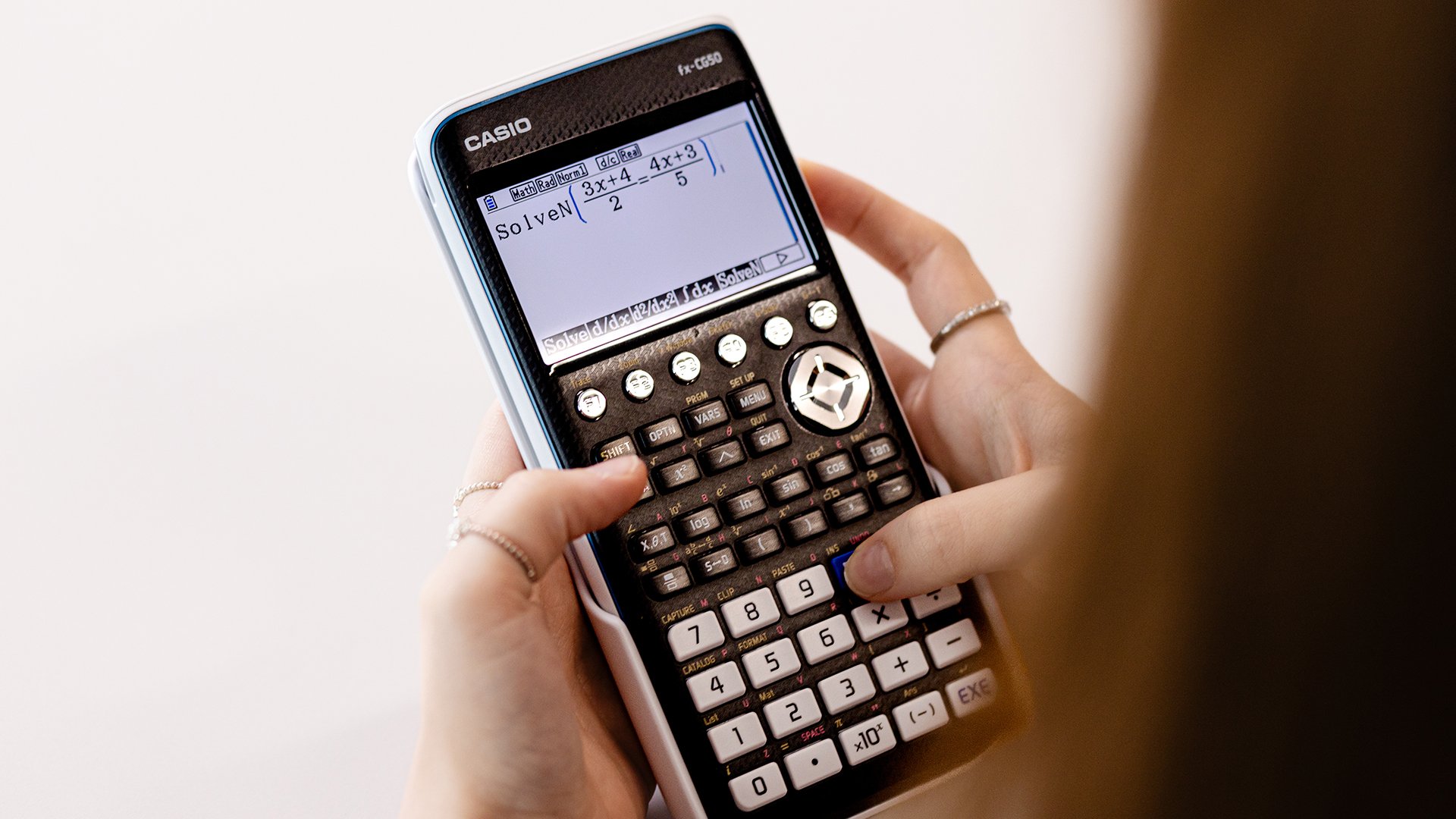
While mathematical proofs are an important part of A-level maths, the logical reasoning behind them has applications far beyond the classroom. In computer science, proof techniques can help verify algorithms and software; in engineering, mathematical reasoning supports safe and reliable design; and in economics, it underpins areas such as game theory and financial modelling.
More broadly, learning to construct and analyse proofs can support critical thinking and logical reasoning skills that are valuable across a wide range of subjects and careers.
Mathematical proof FAQs
What are the four types of mathematical proof in A-level maths?
The main types of mathematical proof at A-level are deductive proof, proof by exhaustion, disproof by counter-example and proof by contradiction. It’s important to understand how each method works and to recognise which approach is appropriate for a particular problem.
Can a calculator be used in a proof question?
Yes, where calculators are permitted, they can help with exploring patterns, evaluating expressions and checking calculations. However, testing individual values on a calculator doesn’t constitute a formal mathematical proof. You still need to provide the logical or algebraic reasoning required by the question.
What is proof by contradiction in A-level maths?
Proof by contradiction starts by assuming that the statement you want to prove is false. You then use logical reasoning to show that this assumption leads to an impossible or contradictory result, demonstrating that the original statement must therefore be true.
Why is proving √2 is irrational an A-level proof question?
Proving that √2 is irrational is a classic example of proof by contradiction. Working on the assumption that √2 can be expressed as a fraction in its simplest form, you then demonstrate that this assumption leads to a contradiction. It provides a clear example of the logical reasoning required in A-level maths proof.
What is proof by exhaustion?
Proof by exhaustion involves considering every possible case and showing that a statement holds in each one. It is most practical when there is a finite and manageable number of possibilities, allowing you to establish that the result is true in every case.
How do you disprove a mathematical statement?
A universal mathematical statement can be disproved using a counter-example. You only need to identify one valid case in which the statement is false. This is known as disproof by counter-example and is one of the proof techniques studied in A-level maths.
Diving deeper into mathematical proofs
If you want to explore mathematical proofs further, there are plenty of resources available to support lessons and revision.
The Bicen Maths YouTube channel, for example, includes videos covering deduction and exhaustion and proof by contradiction.
Calculators can also help you investigate statements and look for patterns before constructing a formal proof. On the fx-CG100, for instance, you can use the Graph&Table app to explore the following counter-example task:
Show your evidence and make a clear conclusion.
Create a table of values of x² + x + 11 for integer values of x from 1 to 20.
Use your table to prove that the following statement is false:
x² + x + 11 is a prime number for all positive integer values of x.
For more ways to incorporate the calculator into A-level maths learning, explore the Casio Education fx-CG100 resource collection, which includes practical guides and videos covering graphing, equations, functions, calculus, statistics and more.