Back to Main Menu






OCR maths past papers: GCSE revision resources guide
Where can teachers find official resources for OCR maths past papers and what other materials will be beneficial in getting students ready for exams?

Preparing students for OCR GCSE maths requires more than ensuring a broad knowledge of the subject. Exam takers will also need to be familiar with the specific structure, tone and expectations of OCR if they are to approach the exam with confidence.
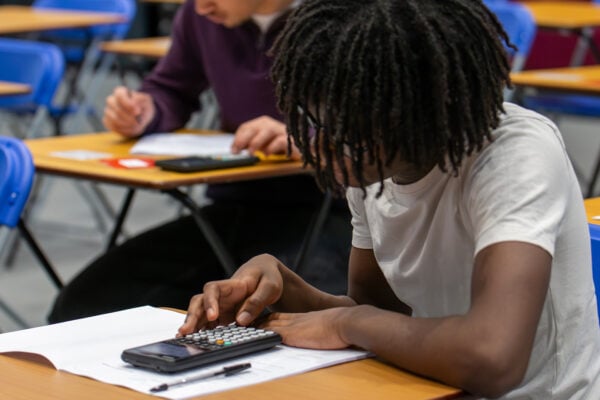
Past papers remain one of the most effective ways to do this. Used as a central part of a comprehensive exam prep strategy, they help students refine exam technique, practise extended reasoning and identify gaps in understanding across both foundation and higher tiers.
Using official past papers from OCR is an essential part of this – but it’s not the only way you can ensure you and your students are fully prepared for exam time.

Key characteristics of OCR maths GCSE papers
Like those of other major UK exam boards, OCR GCSE maths is assessed across three papers of equal weighting, including one non-calculator paper and two calculator papers. However, unlike AQA and Edexcel, which mark each paper out of 80, each OCR paper is worth 100 marks, giving a total of 300 marks.
While AQA and Edexcel papers are numbered 1-3 for both foundation and higher tiers, OCR’s are labelled from 1-6, with 1-3 being foundation and 4-6 the higher. Another difference between the boards is that while for AQA and Edexcel, paper 1 is the non-calculator paper, for OCR, it is paper 2 (paper 5 for higher) that is non-calculator.
Making sure students understand these nuances is important to prevent any surprises in exams if they have been revising using generic materials or those from other boards.
OCR papers are often characterised by detailed questions that place maths in real-world scenarios. Requirements to use multi-step reasoning are common, with students expected to interpret information carefully before selecting and applying appropriate methods. Compared to AQA, questions may be more complex, so strong reading comprehension alongside mathematical fluency is important.
As such, practising on OCR-specific past papers is essential preparation in familiarising students with the specific structure and format of these exams.

Where to find official OCR maths past papers
Official OCR GCSE maths past papers going back to 2017 can be found on the exam board’s website. You’ll find papers organised by year for both June and November examinations, before being split into higher and foundation tiers. In addition to printable PDF versions of each paper, related offerings include formula sheets, mark schemes and examiner’s reports.
The examiner’s reports can be a particularly valuable resource, as they give detailed breakdowns of how each paper was completed. As well as overviews of how students performed, including notes of what topics were answered well and which areas showed room for improvement, detailed question-by-question reviews note common mistakes. These may prove useful in formulating lesson and revision plans to strengthen weak areas.
Direct, reliable access to official OCR mark schemes and supporting resources is one of the biggest benefits of using the exam board’s own site. However, this is not the only platform out there where you can access OCR GCSE maths past papers.
Reviewing GCSE maths revision providers that support OCR
There are a range of online resources that can help support OCR GCSE maths exam preparation. In addition to also being sources for past papers, they typically offer a range of additional resources that the exam board may not have, including interactive online tools, printable practice packs and video guides.

Online GCSE maths revision platforms
For online resources, DrFrostMaths has interactive versions of all official OCR maths past papers, as well as tools that allow you to search for questions by OCR specification codes, generate custom worksheets and set auto-marked online tasks. The ability for students to get instant feedback and progress info make it particularly useful for identifying weaknesses before attempting full papers.

Printable worksheets and practice packs
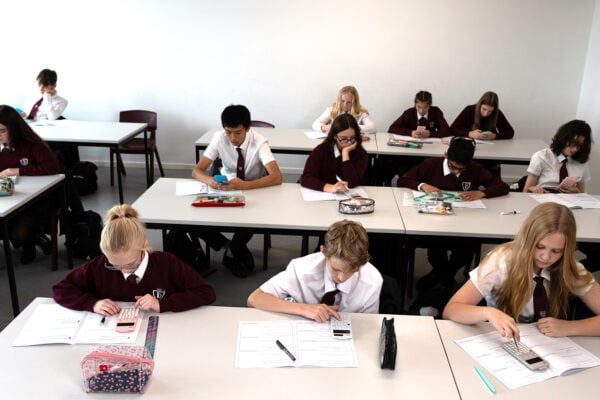
Printable worksheets are ideal for helping students practice in exam conditions. While they don’t offer the same immediate feedback as online resources, structured question sets and exam-style layouts help deliver targeted revision and build confidence in what to expect.
MME Revise and Physics & Maths Tutor both offer OCR-style practice papers, topic booklets and revision materials structured around foundation and higher tiers. These resources replicate the layout and mark allocations students will encounter, helping them refine written method presentation, calculator use and time management without relying on digital prompts.

Video-based GCSE maths revision resources
Video channels such as Maths Genie, Corbettmaths and The GCSE Maths Tutor provide walkthroughs of past paper questions, topic-based explanations and grade-focused revision playlists. While not always labelled exclusively for OCR, many videos reference OCR-style questions and mirror the board’s approach to multi-step reasoning.
On-demand video explanations allow students to pause, rewind and revisit worked examples, which can be particularly helpful for more complex topics. For calculator papers, visual modelling of how to work through questions on these devices is a big benefit.
However, video resources can encourage passive learning if not paired with active practice. Unlike written materials, they do not always require students to show full working or structure extended responses independently, so they are most effective when used alongside exam-style question practice.
Final thoughts on OCR maths past papers and revision resources
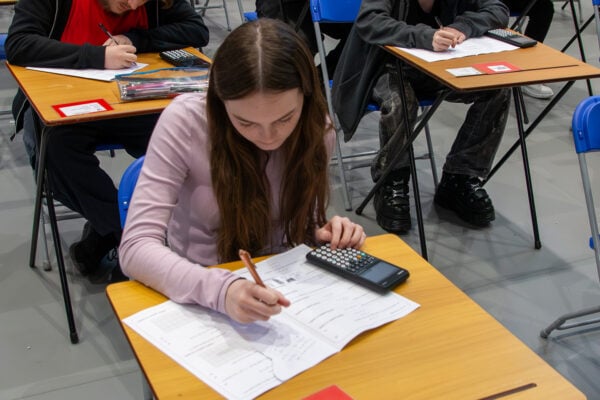
OCR maths past papers remain one of the most reliable tools for effective exam preparation. They give students direct exposure to the structure, mark allocation and style of questioning they will encounter in the exam hall, helping to build familiarity and confidence under timed conditions.
However, they are most powerful when used alongside high-quality revision platforms. Official OCR papers offer authenticity and insight into assessment objectives, while trusted third-party providers offer targeted topic practice, worked solutions and interactive tools that can address gaps before full papers are attempted.
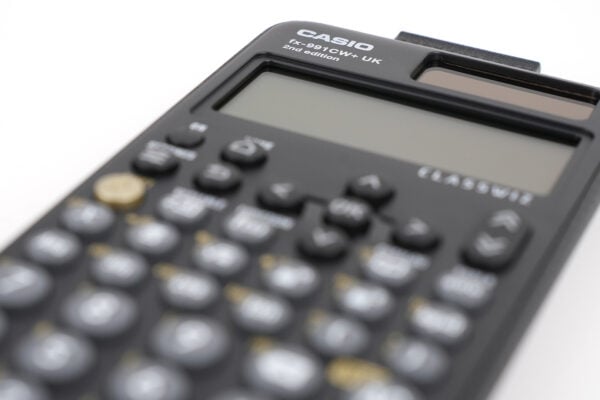
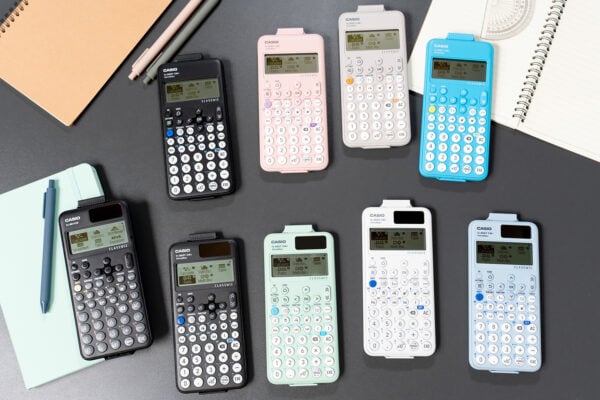
This combined approach allows you to move from focused skill development to whole-paper exam rehearsal. By blending authoritative OCR materials with structured, specification-aligned revision resources and calculator-specific tutorials for common GCSE scientific devices like the ClassWiz fx-83/85GT CW+, students can walk into their exam fully prepared for what to expect.
Blog
- Graphing technology
- Scientific calculators
- Exams
- Curriculum
- Classroom
- Students